
Navigating the Changing Hop Market: Brewer’s Guide 2024 with DVKSP
Discover key insights and strategies from the 2024 hop acreage report to help brewers adapt and thrive.

The hop market has always been dynamic, with various factors influencing the cultivation and availability of different hop varieties.
The 2024 hop acreage report provides valuable insights into current trends, helping brewers make informed decisions for the future.
This article explores the key findings from the report, focusing on changes in hop acreage in Germany and the United States, and offers strategic advice for brewers planning their next steps.
Overview of 2024 Hop Acreage Developments
The Association of German Hop Growers e. V. released the final figures for the hop-growing regions in Germany, showing a slight adjustment in the hop-growing area.
The total hop acreage in Germany has been reduced by approximately 340 hectares, reflecting current market conditions.
In the United States, the National Agricultural Statistics Service reported a significant 18% decline in hop acreage in the Pacific Northwest (PNW), reducing the total area to 44,543 acres (18,026 hectares).
Trends in High-Alpha and Aroma Hops

One of the notable trends in Germany is the continued expansion of high-alpha hop varieties, particularly Herkules.
Herkules remains the hop variety with the largest area under cultivation, now totalling 7,917 hectares, an increase of 419 hectares from the previous year.
This trend highlights the industry’s shift towards hops that provide high alpha acids, essential for bitterness and stability in brewing.
Conversely, there has been a significant reduction in the acreage of formerly prominent bitter hop varieties such as Magnum (down 150 hectares), Nugget (down 10 hectares), and Taurus (down 31 hectares).
Newer breeding varieties like Polaris have gained traction, increasing by 27 hectares, while climate-resistant varieties like Titan have seen a substantial increase of 228 hectares.
For aroma hops, the report indicates an effort to counteract overproduction by reducing the cultivated acreage.
Significant declines were observed in varieties like Perle (down 375 hectares) and Hallertauer Tradition (down 241 hectares).
Speciality aroma varieties such as Mandarina Bavaria and Hallertau Blanc also saw reductions of 27 hectares and 21 hectares, respectively.
Despite these reductions, some varieties, like the climate-stable Tango, have increased in acreage by 26 hectares.
Implications for Brewers
Understanding these shifts in hop acreage is crucial for brewers, as it directly impacts the availability and pricing of different hop varieties.

Here are some strategic insights for brewers based on the 2024 hop acreage report:
- Embrace High-Alpha Varieties: With the increase in high-alpha varieties like Herkules, brewers should consider incorporating these hops into their recipes.High-alpha hops provide a robust bitterness and are essential for achieving the desired flavour profile in many beer styles, especially IPAs.
The increased availability of Herkules suggests it will be a reliable and cost-effective choice for brewers.
- Adapt to Climate-Resilient Hops: The rise in acreage for climate-resistant varieties such as Titan indicates a growing need to adapt to changing environmental conditions.Brewers should explore using these varieties, which offer stability and consistent yields even in challenging climates.
Titan, for example, is gaining popularity among growers and brewers for its resilience and favourable brewing characteristics.
- Diversify with New Breeding Varieties: Newer hop varieties like Polaris are becoming more prominent.Brewers can experiment with these hops to create unique and innovative beers.
Polaris offers a distinctive flavour profile, making it an exciting addition to the brewing toolkit.
- Plan for Reduced Aroma Hop Availability: The significant reductions in aroma hop varieties such as Perle and Hallertauer Tradition require brewers to plan carefully.These hops are prized for their delicate flavours and aromas, essential in many traditional and craft beer styles.
Brewers should consider securing contracts for these varieties early or exploring alternative aroma hops to ensure a consistent supply.
- Monitor Specialty Aroma Hops Varieties: The reduction in speciality aroma varieties like Mandarina Bavaria and Hallertau Blanc suggests a potential shortage.Brewers who rely on these hops for their unique flavour contributions should keep a close eye on market trends and consider alternative options or blends to maintain their beer’s distinctiveness.
- Leverage the Stability of Traditional Varieties: Despite the changes, the acreage for older land varieties remains relatively stable.These varieties continue to be popular in the craft beer scene for their noble aromas and high-quality bitterness.
Brewers can rely on these traditional hops to maintain consistency in their flagship beers.
Future Outlook and Strategies
The 2024 hop acreage report underscores the importance of flexibility and adaptation in brewing.
As the hop market evolves, brewers must stay informed and be ready to adjust their strategies.

Here are some forward-looking strategies based on the current trends:
- Strengthen Supplier Relationships: Building strong relationships with hop suppliers can provide brewers with better insights into market trends and more secure access to desired hop varieties.Consider forming partnerships or long-term contracts to ensure a steady supply. DVKSP, a premium supplier of hops, malts, spices, and brewing yeast, is an excellent partner for brewers looking to secure top-quality ingredients.
- Invest in Research and Development: Stay ahead of the curve by investing in R&D to explore new hop varieties and brewing techniques.Experimenting with different hops can lead to the creation of unique beer styles that stand out in the market.
- Focus on Hops Supply Reliability: With climate change impacting hop yields, sustainability should be a key consideration.Brewers can collaborate with DVKSP to establish strong, mutually beneficial relationships that can go a long way in ensuring a reliable supply.
Regular communication, transparency, and collaboration can help in understanding each other’s needs and challenges, leading to more effective problem-solving and supply chain resilience.
- Educate Consumers: Engage with consumers to educate them about the challenges and changes in hop cultivation.Transparency about ingredient sourcing and the impacts of climate change can build trust and loyalty among beer enthusiasts.
- Diversify Hop Portfolio: Diversification is essential in managing risk.By incorporating a mix of high-alpha, aroma, and climate-resilient hops, brewers can ensure flexibility in their production processes and mitigate the impact of potential shortages.
- Investing in Long-term Contracts: Securing long-term contracts with premium hop suppliers like DVKSP can provide stability and predictability for both parties.These contracts can ensure a steady supply of hops for brewers while providing growers with the financial security needed to invest in their operations and improve yield and quality and to brewers with consistent premium quality of hops delivery as per their needs.
Conclusion
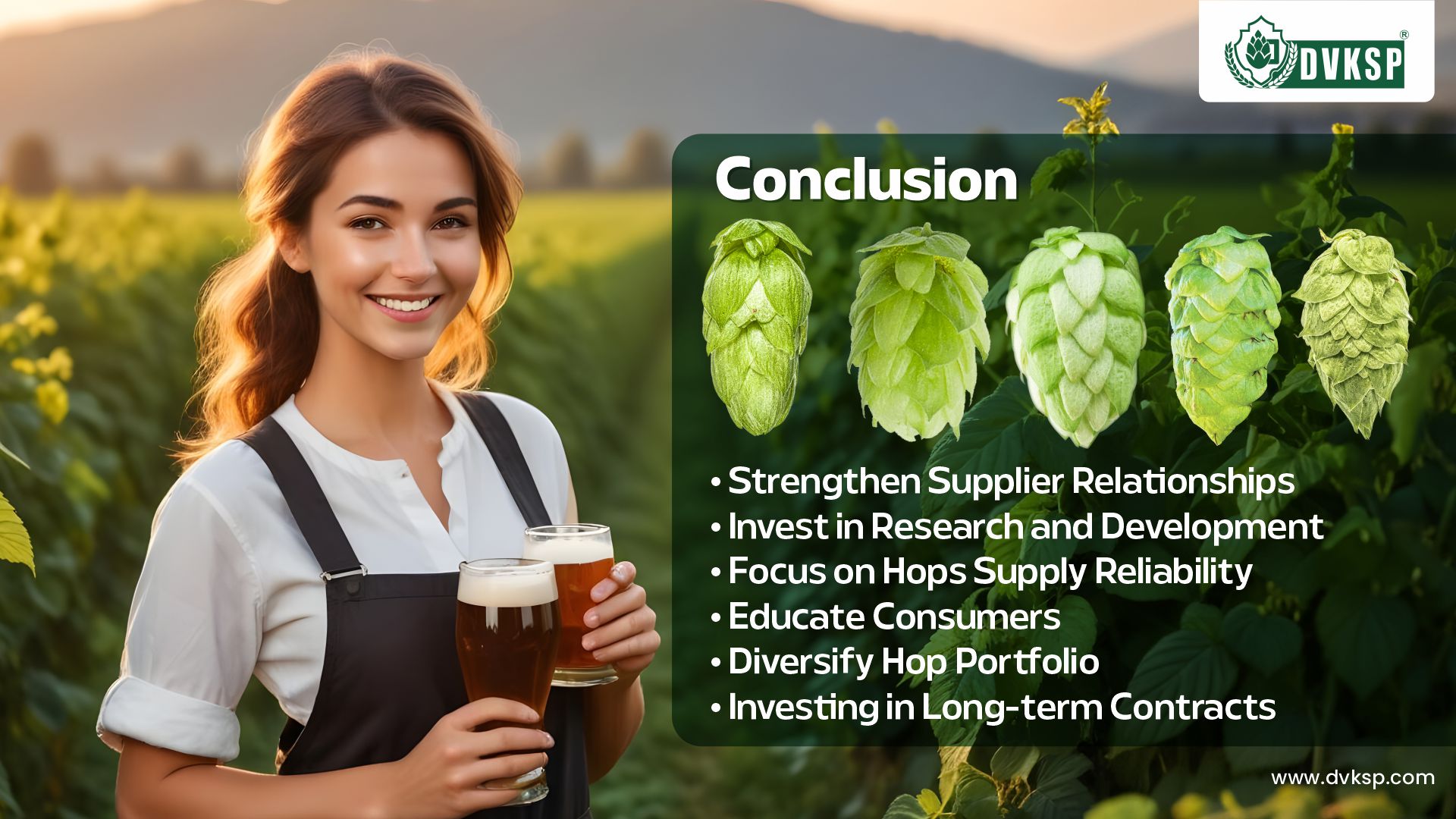
The 2024 hop acreage report provides critical insights into the current state of hop cultivation in Germany and the United States. Source: Report Source: Baywa Hops 2024 report.
Brewers who understand these trends and adapt their strategies accordingly will be better positioned to navigate the evolving market.
By embracing high-alpha varieties, exploring climate-resilient hops, and planning for reduced availability of certain aroma hops, brewers can continue to innovate and produce exceptional beers.
Our premium Hops, Malts, Spices & brewing Yeast products and commitment to supply reliability can help your brewery excel in this dynamic market.
Staying informed, flexible, and proactive will be key to thriving in the ever-changing world of brewing.
Frequently Asked Questions (FAQs) on Hops Acreage 2024 Report will guide craft beer brewers through these dynamic market changes and equip you with strategies to plan for the future beer production for your craft brewery in a better way with DVKSP.
-
What are the key trends in the 2024 hops market?
The 2024 hop market shows a significant shift towards high-alpha hop varieties, especially Herkules, and a reduction in aroma hop varieties like Perle and Hallertauer Tradition. There’s also an increase in climate-resistant varieties such as Titan.
-
How has hop acreage changed in Germany and the United States in 2024?
In 2024, Germany’s hop acreage decreased by approximately 340 hectares, while the United States, particularly in the Pacific Northwest, saw an 18% decline in hop acreage, reducing the total area to 44,543 acres.
-
Why are high-alpha hop varieties like Herkules important for brewers?
High-alpha hop varieties like Herkules are crucial for brewers as they provide robust bitterness and stability, essential for achieving the desired flavor profile in many beer styles, especially IPAs. The increased availability of Herkules makes it a reliable and cost-effective choice.
-
What is the significance of climate-resistant hop varieties like Titan?
Climate-resistant hop varieties like Titan are gaining popularity due to their stability and consistent yields in challenging climates. Brewers can use these hops to adapt to changing environmental conditions and ensure reliable production.
-
How should brewers adapt to the reduced availability of aroma hops in 2024?
Brewers should plan carefully for the reduced availability of aroma hops like Perle and Hallertauer Tradition by securing contracts early or exploring alternative aroma hops. Monitoring market trends and considering blends can help maintain beer distinctiveness.
-
What strategies should brewers consider based on the 2024 hop acreage report?
Brewers should consider embracing high-alpha varieties, exploring climate-resilient hops, diversifying with new breeding varieties, planning for reduced aroma hop availability, and leveraging the stability of traditional varieties. Strengthening supplier relationships and investing in research and development are also crucial strategies.
-
How can DVKSP help brewers navigate the changing hop market?
DVKSP, a premium supplier of hops, malts, spices, and brewing yeast, provides brewers with high-quality ingredients and insights into market trends. Partnering with DVKSP ensures a reliable supply of premium hops, essential for adapting to market changes and producing exceptional beers.
- What impact does the reduction in hop acreage have on hop prices?
The reduction in hop acreage, particularly in the United States and Germany, may lead to increased prices for certain hop varieties due to decreased supply and higher demand.
- Why are newer breeding hop varieties like Polaris gaining traction?
Newer breeding hop varieties like Polaris are becoming popular due to their unique flavor profiles and brewing characteristics, offering brewers new and innovative options for crafting distinctive beers.
- How does the 2024 hop acreage report affect craft breweries?
The 2024 hop acreage report provides critical insights that help craft breweries plan their hop purchases, adapt their brewing recipes, and manage supply chain risks more effectively.
- What role do traditional hop varieties play in the current market?
Traditional hop varieties remain stable and continue to be favored for their noble aromas and high-quality bitterness, making them reliable choices for maintaining consistency in flagship beers.
- How can brewers ensure a steady supply of hops amid market fluctuations?
Brewers can ensure a steady supply of hops by forming long-term contracts with reliable suppliers like DVKSP, diversifying their hop portfolio, and staying informed about market trends.
- What are the benefits of investing in research and development for breweries?
Investing in research and development allows breweries to explore new hop varieties and brewing techniques, leading to the creation of unique beer styles that can stand out in a competitive market.
- How can brewers educate consumers about changes in hop cultivation?
Brewers can engage with consumers through transparent communication about ingredient sourcing, the impacts of climate change on hop yields, and the efforts made to ensure sustainable brewing practices.
- What strategies can brewers use to manage potential shortages of speciality aroma hops?
To manage potential shortages of speciality aroma hops, brewers can monitor market trends, secure contracts early, explore alternative hop varieties, and consider blending different hops to maintain their beer’s unique flavor profiles.


Share this entry